 English
 Ελληνικά
 Italiano
 Español
 Deutsch
 Français
 Português
 Polski
 Nederlands
 Български
 Hrvatski
 Türkçe
 Svenska
 Dansk
Dansk
 Norsk
Norsk
 Shqip
Shqip
Islands near Paros: 7+1 gems
Enjoy an island-hopping experience in the AegeanPlanning a trip in the Cyclades and not sure where to go next? Paros is one of the best-connected islands in Greece, with numerous ferries departing daily from the port of Parikia. Whether you're after a quiet escape, a party-ready shoreline, or a volcanic wonder, we're here to help you find the best islands near Paros, pick your destinations, and plan an unforgettable island-hopping experience.
1. Naxos
Naxos is the largest island in the Cyclades and arguably the most self-sufficient: fertile, mountainous, and full of things to do beyond the beach. It appeals equally to families after long sandy shores, foodies hunting local produce, and hikers wanting to disappear into the interior for a day.
The first thing you'll see arriving by ferry is the Portara, the iconic marble doorway of the Temple of Apollo that stands on a small islet at the entrance to the port. From there, the medieval Kastro district crowns the hilltop capital of Chora, while the west coast is lined with some of the Cyclades' finest beaches: Agios Prokopios, Agia Anna, and the vast sweep of Plaka. Don't leave without picking up a wedge of graviera (the island's celebrated aged cheese, nutty and slightly sweet) from one of the dairies near the market, or a jar of the island's renowned thyme honey.
Naxos is the closest big island to Paros, just 25 minutes away on a high-speed ferry. Crossings run every day of the year, with multiple daily departures during the summer.
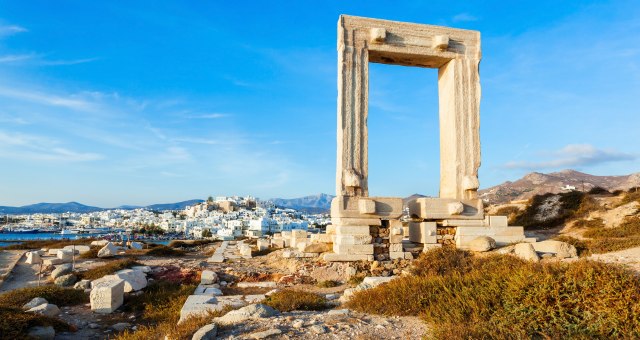
The iconic Portara marble gate on the island of Naxos
2. Sifnos
Sifnos has built a reputation as the culinary heartland of the Cyclades: a small island that punches well above its weight when it comes to food. Pottery and gastronomy have been its twin identities for centuries.
The hilltop capital Apollonia is a network of marble-paved alleys lined with ceramics workshops and tavernas. Head to Kastro, the medieval fortified village perched above the sea, for sweeping views and one of the most atmospheric evening walks in the islands. On the food front, Sifnos is the home of mastelo (lamb slow-cooked in wine and rosemary) and revithada (chickpea soup baked overnight in a clay pot), both dishes best found at village tavernas away from the port. The island's prettiest beaches include Platis Gialos and Vathi, the latter tucked into a sheltered bay.
Ferries from Parikia reach Sifnos in as little as 55 minutes by high-speed. Ferries normally run 2 times daily throughout the summer, with reduced frequency in winter.
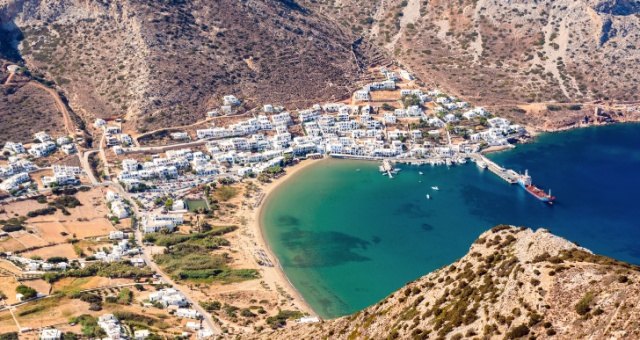
The seaside village and port of Kamares in Sifnos
3. Syros
Syros is the administrative capital of the Cyclades and one of the most architecturally striking islands in Greece. This Greek islands wasn't shaped by tourism but by trade and shipbuilding, which left it with grand neoclassical mansions, a working waterfront, and a cultural life that functions all year round.
Ermoupoli, the island's capital and the largest city in the Cyclades, is remarkable for its Apollo Theater and the elegant Town Hall square where locals gather on weekend evenings. Above the city, the medieval Catholic settlement of Ano Syros is a steep climb rewarded by panoramic views and a completely different architectural character. Syros is also the birthplace of rebetiko (the bluesy urban folk music that became the soundtrack of 20th-century Greece), and live performances still surface in the city's older ouzeria (tavern-style bars serving ouzo, Greece's classic anise aperitif).
The crossing from Parikia takes as little as 40 minutes by high-speed ferry. Ferries usually run up to 3 times daily in summer, with regular departures throughout the rest of the year as well.
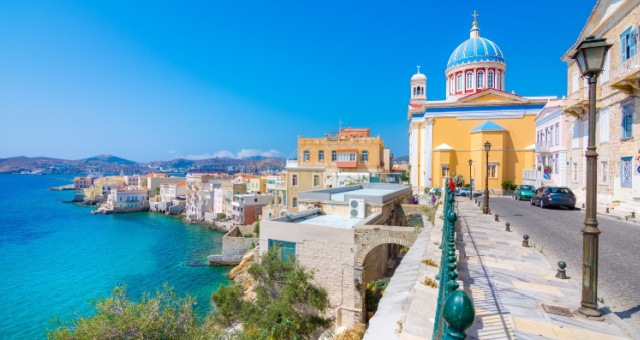
The elegant Vaporia district and the blue-domed St. Nicholas church in Syros
4. Mykonos
Mykonos is one of the most famous islands in the Mediterranean and the undisputed nightlife capital of the Aegean. It's also genuinely beautiful when you know where to look, and there's far more here than beach clubs.
Chora, the island's whitewashed capital, rewards anyone who strays from the busiest lanes: the row of Kato Mili windmills overlooking Little Venice is one of the most photographed views in Greece, and the backstreets are full of small galleries and good seafood restaurants. For beaches, Psarou is the glamorous option, while Elia and Agios Sostis offer quieter stretches toward the southern coast. The nearby island of Delos, accessible by excursion boat from the old port, is one of the most significant archaeological sites in the ancient world and a completely different side of Mykonos worth half a day.
High-speed ferries from Paros reach Mykonos in as little as 35 minutes. The route usually operates from March to November, with up to 11 daily departures during peak season.
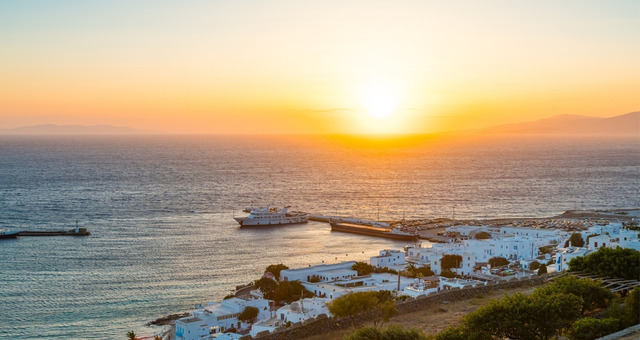
The sun setting over the picturesque Chora and port of Mykonos
5. Ios
Ios spent decades being typecast as a party island, and while that energy still lives in parts of the summer, the reality today is more layered. Families, couples, and travelers who simply want excellent beaches alongside good food have steadily made it their own.
Mylopotas, a long arc of golden sand on the south coast, is one of the finest beaches in the Cyclades. For something quieter, Manganari in the south is a rewarding drive through the island's dry, hilly interior. Chora, the hilltop village, is a maze of Cycladic alleys dotted with churches, bars, and restaurants that come alive at dusk, and a walk up to the windmills above it at sunset, with the harbor far below, is the kind of simple pleasure that stays with you. Homer is traditionally believed to be buried on Ios, and the tomb site near the north of the island is worth a detour for history enthusiasts.
Ferries from the port of Parikia reach Ios in about 1 hour on a high-speed service. The route runs all year round, with up to 6 daily departures in summer.
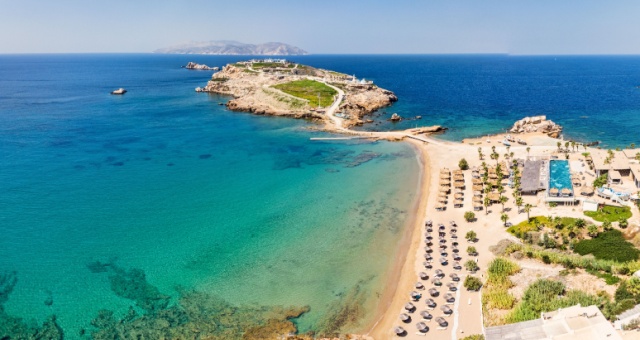
The serene Koumbara beach and its rocky coastline in Ios
6. Milos
Milos is the volcanic outlier of the central Cyclades, with a coastline shaped by lava flows and millennia of erosion into something almost otherworldly. The island is home to more than 70 beaches, many accessible only by boat, and the striking landscape alone is reason enough to make the journey.
Kleftiko, a cluster of sea caves and white rock formations on the southwest coast, is best explored on a boat trip from the port of Adamas. Sarakiniko is equally striking: a moonscape of bleached volcanic rock dropping into electric-blue water that draws photographers from across the world. The hilltop village of Plaka has a well-preserved Venetian kastro and a small but excellent Archaeological Museum - the original site where the Venus de Milo was discovered. In the evenings, the fishing village of Klima, with its colorful syrmata (boathouses built right to the water's edge), is a perfect spot to settle in for a tsipouro (a pomace spirit similar to grappa) as the light fades.
The ferry from Paros to Milos takes about 1 hour 45 minutes on a high-speed service. The route runs year-round, with daily crossings in summer.
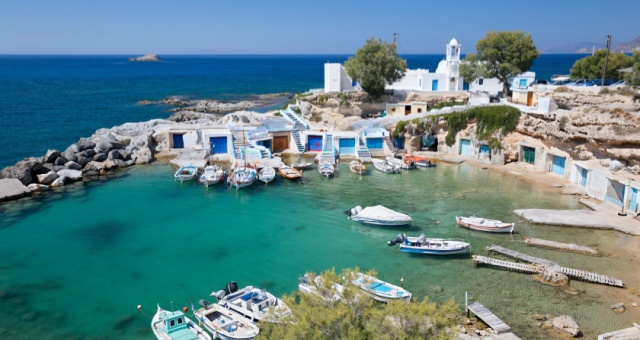
The charming traditional houses and turquoise waters of Mandrakia in Milos
7. Santorini
Santorini is the caldera island at the southern edge of the Cyclades, and whatever you may have heard about the crowds, the landscape is every bit as dramatic as the photographs suggest. The cliffside villages of Oia and Fira perch above a submerged volcanic crater for views that are genuinely unlike anything else in Greece.
Akrotiri, on the southern tip, is a remarkably well-preserved Bronze Age settlement buried under volcanic ash around 1600 BC - often described as the Minoan Pompeii. The island's vineyards produce distinctive wines from the local assyrtiko grape, grown in low basket-shaped vines that protect against the meltemi (the fierce summer wind that sweeps across the Aegean), and a visit to one of the small wineries near Pyrgos or Megalochori makes for a very rewarding afternoon. Perissa and Kamari offer beaches of distinctive black volcanic sand if you want to balance sightseeing with a swim.
Ferries from Parikia reach Santorini in as little as 1 hour 30 minutes on a high-speed service. The connection runs every day of the year, with up to 8 daily crossings during the summer.
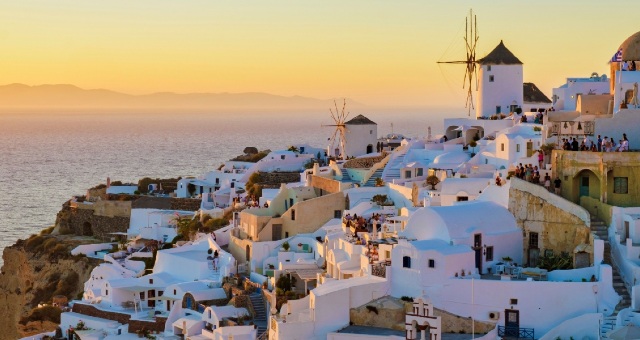
The famous sunset views over the white-washed buildings of Oia in Santorini
8. Antiparos
Antiparos is Paros's quieter, more low-key neighbor, sitting just across a narrow channel to the southwest. Small enough to explore on foot or by scooter in a single day, it draws visitors who want the warmth and character of the Cyclades without the summer crowds.
The island's main village is a compact tangle of whitewashed lanes, tavernas, and bougainvillea - ideal for a slow lunch or an afternoon wander. Sifneiko beach and Glyfa are two of the best spots for swimming, while the Cave of Antiparos is one of the most impressive in Greece: a vast stalactite cavern that has been drawing curious visitors since antiquity and is easily reached by local bus from the port. The island also has a small but charming kastro (Venetian hilltop fortress) at its center, far quieter than anything you'll find on the larger islands.
There are two departure points from Paros: the port of Pounta, just 7 minutes away, offers the most frequent crossings with over 30 per day in summer, while the port of Parikia also has up to 5 daily departures during peak season. Note that tickets for this route are purchased directly on board and cannot be booked online in advance.
Island-hopping from Paros: book your ferry tickets
Ready to set off on your Cyclades adventure? On Ferryhopper, you can compare all available ferry schedules and prices from Paros in one place, find the best deals, and book with no hidden fees. Check our Map of ferries to plan your full itinerary across the islands and visualize your trip.