 English
 Ελληνικά
 Italiano
 Español
 Deutsch
 Français
 Português
 Polski
 Nederlands
 Български
 Hrvatski
 Türkçe
 Svenska
 Dansk
Dansk
 Norsk
Norsk
 Shqip
Shqip
Elba island beaches
Top 10 spots to exploreThe largest island of the Arcipelago Toscano (Tuscan Archipelago), Elba packs more than 100 beaches into its 224 km2, ranging from long sandy stretches with all the facilities you could want to wild, boat-access-only coves with nothing but crystal water and silence.
The island's geology makes it genuinely varied: the south coast is mostly sandy and warm-toned; the north and west coast alternate between white-pebble bays, dramatic granite cliffs, and sheltered gulfs. Whether you're arriving with young children, snorkeling gear, or just a book, there's a stretch of coastline that feels made for you.
The best beaches on Elba island
1. Fetovaia
Ask almost anyone on the island to name their favorite beach, and Fetovaia will come up quickly. Tucked into the southwestern coast and sheltered by a promontory thick with Mediterranean scrub, the cove opens onto golden sand and water that shifts through every shade of blue-green depending on the light and depth. The seafloor drops gradually, making it comfortable for all levels of swimmers, and the surrounding vegetation gives the bay an unusually secluded feel despite the beach being well-equipped with sunbeds and a bar.
In early summer, sea lilies bloom along the dune margins, adding a scent to the whole experience. If you want a quieter spot, check the wide granite slabs to the left of the main beach, flat enough for sunbathing and well-suited for diving in.
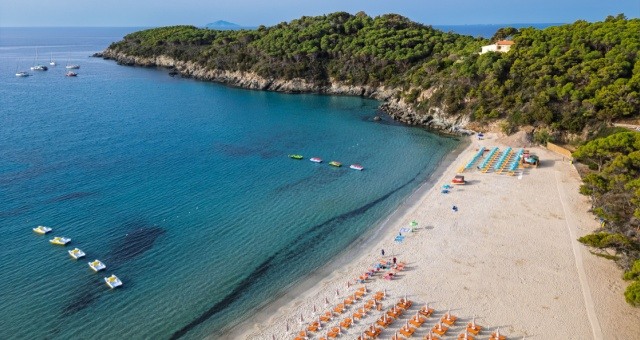
The protected cove of Fetovaia, one of Elba's most iconic beaches
2. Biodola
Biodola sits in one of the most sheltered gulfs on the northern coast, about 8 km from Portoferraio. The beach stretches for roughly 600 meters of fine pale sand, and the calm, shallow conditions make it especially good for children. Several hotels line the bay, so facilities here are among the best on the island: sunbed rental, bars, restaurants, and easy parking nearby.
The cliffs at either end are popular with snorkelers, and the clear water gives good visibility even close to shore. Sunsets here look toward the islands of Capraia and Corsica on the horizon, which is reason enough to stay until the light goes.
3. Sansone
Sansone is one of the most visually striking beaches on Elba, and the one most likely to catch you off guard on first visit. Framed by a towering white cliff, the shoreline is made up of smooth white pebbles that sit against water of extraordinary clarity, the kind where you can see the bottom at depths that would be murky elsewhere. It sits near Portoferraio, making it an easy choice for anyone based in the north of the island.
The water here is exposed enough to stay cool and exceptionally transparent, which is why snorkelers tend to rate it among the island's best spots. Bring water shoes if pebble beaches are new to you. A small bar operates in high season.
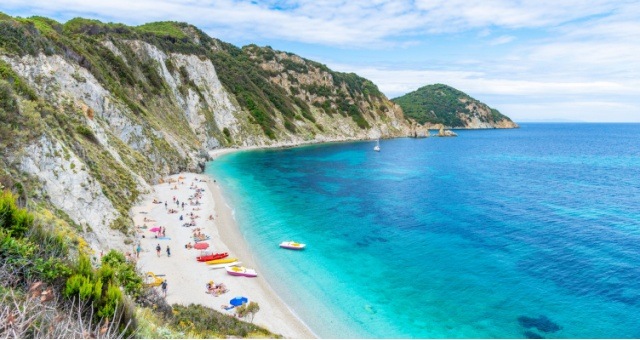
The breathtaking turquoise waters and white cliffs of Sansone beach in Elba
4. Cavoli
On the southwestern coast, Cavoli has the energy that Fetovaia lacks: it's the beach where younger crowds tend to gather, and in peak season the beach club scene comes alive with music and the kind of long, unhurried afternoons that blur into early evenings. The sand is pale and the water genuinely clear, with a sheltered position that protects the bay from northern winds.
On the eastern edge of the bay, there's a sea cave called the Grotta Azzurra, accessible only by kayak or pedal boat. It's worth the effort if conditions are calm.
5. Sant'Andrea and Cotoncello
Sant'Andrea is a small beach on the northwestern coast with cream-colored fine sand and deep, rich blue waters. It's flanked to one side by the even smaller Cotoncello, a natural near-enclosed swimming pool formed by smooth granite outcrops. Between the two, the snorkeling possibilities are excellent, and the overall atmosphere is calm and unhurried.
This stretch of coast is also one of the best for watching the sun set directly into the sea, particularly if you can see the silhouette of Corsica on the horizon. It's a popular spot for a late-afternoon aperitivo at one of the small bars tucked into the hillside above the shore.
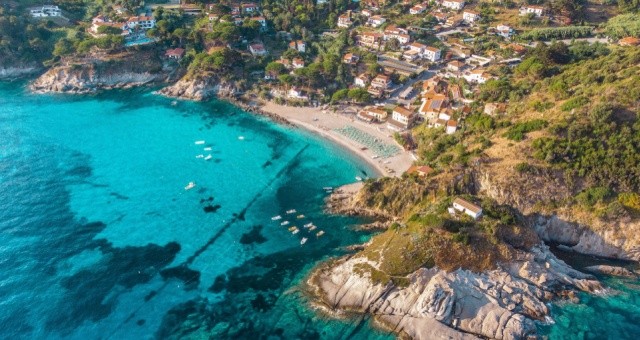
The picturesque Sant'Andrea Beach and coastal village in Elba
6. Lacona
Lacona is one of the largest beaches on the island, stretching along a wide, sheltered gulf on the southern coast. It's unusual for Elba in that it has proper sand dunes, protected as part of a natural reserve. The water is shallow for a long way out, and the gulf blocks most of the wave action, making it a reliable choice when the sea is less calm elsewhere.
It's well-served by buses from Portoferraio and has plenty of camping options nearby, so it tends to attract a diverse crowd. Families with young children particularly appreciate the gradual entry into the water.
7. Marina di Campo
If you want a proper beach town, Marina di Campo is the place. It has Elba's longest sandy beach, a working port, a lively evening promenade, boutique shopping, and some of the island's best restaurants all within easy reach. The beach itself is wide and long, split between organized beach clubs and free sections, and the water is calm enough for paddle sports and swimming.
It's also one of the most accessible beaches on the island by public transport, sitting on the main bus routes from Portoferraio. For anyone island-hopping or arriving without a car, it's the most practical base on the south coast.
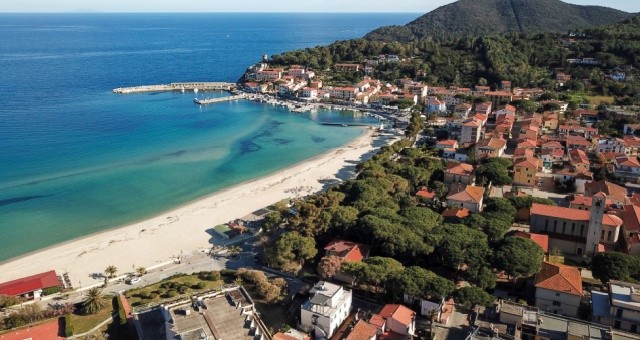
The expansive Marina di Campo Beach and harbor in Elba
8. Innamorata
Innamorata ("The Sweetheart") takes its name from a local legend: Maria drowned herself in the sea to save her beloved Lorenzo. The story aside, the cove itself earns a visit on its own terms: clear water, a romantic setting between low cliffs, and views that extend toward the small Gemini islets just offshore.
The islets are reachable by paddleboard or kayak in calm conditions, and the channel between them and the shore offers an excellent snorkeling setting. Parking is limited and paid; arriving in the late afternoon tends to mean better luck.
9. Procchio
Procchio is one of the longest sandy beaches in Elba's north, set in a wide bay close to the village of the same name. It's well-organized, with a good range of facilities, a bus connection, and enough room that it doesn't feel crowded even when busy. The water is calm, and the view across the bay has that particular quality that the north coast does well: clear sky, distant islands, and pine trees framing either end of the beach.
It's a solid choice for anyone who wants a straightforward, beautiful beach day without needing to drive down winding coastal roads.
10. Capo Bianco
Capo Bianco sits near Portoferraio and is named after its pale, chalky cliff face that rises sharply behind the shoreline. The beach is a mix of white smooth stones and fine sand, and the protected position keeps it calm in most wind conditions. Marine life here is rich enough that snorkeling around the base of the cliffs rewards the effort.
It's walkable from parts of Portoferraio and has a small paid parking area nearby. A modest beach establishment normally operates in high season.
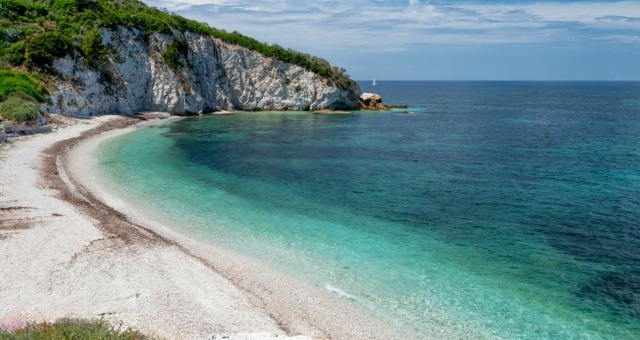
The white pebbles and crystal waters of Capo Bianco beach in Elba
Tips for visiting Elba's beaches
- Timing matters on this island: August is peak season, with mainland Tuscans arriving in force for Ferragosto (the Italian mid-August holiday). Late May, June, and September offer warm water, fewer crowds, and far easier parking. The beaches are genuinely lovely in the shoulder season.
- Watch the wind: the island's geography means that when a southern *scirocco* wind is blowing, the northern beaches (Biodola, Sansone, Sant'Andrea, Spartaia) are sheltered and calm. When the wind comes from the north, the southern and western coves (Fetovaia, Cavoli, Innamorata) are the better choice. A quick check of any local weather app will tell you which way it's blowing.
- Pack water shoes: if you plan to visit the pebble beaches on the north and west coasts. Many of the most beautiful spots on Elba are rocky underfoot, and the experience is significantly better with the right footwear.
- Some beaches charge for parking and fill up early in summer. The Marebus service runs along both coasts during the season, connecting the main towns to beach access points, and is a practical way to avoid the parking situation entirely.
- Jellyfish can be an issue in late summer, particularly in warm, still conditions. Check locally before swimming if this concerns you, and choose beaches on the windward side when they're around.
How to get to Elba by ferry
The ferry is by far the most practical way to reach Elba, and the crossing itself is part of the experience. Elba sits just 10 km from the Tuscan mainland, so the sea journey is short and the views are good in both directions.
Ferries from Piombino
Almost all ferry connections to Elba depart from Piombino, a port town in the province of Livorno. Ferries from Piombino to Elba operate all year round with three different companies: Blu Navy, Toremar, and Moby Lines. In summer, ferries run from early in the morning to late in the evening. Ferry tickets usually range between €18-€28.
Piombino is easily reached by train (the Piombino Marittima station is a short walk from the ferry terminal) and by direct buses from Florence, Grosseto, and Milan.
There are three arrival ports to choose from depending on where you're headed on the island:
- Portoferraio: the main port and capital of Elba, with the most daily departures (up to 40 per day in high season). The crossing takes around 40 minutes to 1 hour, with tickets starting at around €18. This is the best arrival point for the northern beaches and the island's main towns.
- Rio Marina: on Elba's eastern coast, close to Porto Azzurro and several quieter beaches. The crossing takes around 45 minutes, with up to 7-8 daily connections in season.
- Cavo: the closest port to the mainland, in the northeast of the island. The fastest option, with high-speed crossings taking as little as 15 minutes. Ideal if you want to minimize time at sea or if you're heading to the northeastern part of the island.
Tip: if you're traveling with a car in July or August, arrive at the port of Piombino at least 1 hour before departure to avoid queues. Booking in advance is strongly recommended for peak season, especially if you are bringing along your vehicle.
Getting around the island
Having a car or scooter on Elba makes a genuine difference, especially if you want to reach the more secluded beaches. You can bring your vehicle on the ferry from Piombino, or rent one on arrival in Portoferraio. The island also has a bus network covering the main routes, and the summer Marebus coastal service is a reliable beach-hopping option without a vehicle.
Ready to book your ferry to Elba? Check all available ferry schedules to Elba and book your tickets on Ferryhopper with no hidden fees.