English
 Ελληνικά
 Italiano
 Español
 Deutsch
 Français
 Português
 Polski
 Nederlands
 Български
 Hrvatski
 Türkçe
 Svenska
 Dansk
Dansk
 Norsk
Norsk
 Shqip
Shqip
Ferry from Holyhead to Dublin
Tickets, prices & schedulesFrom Monday 28 September 2026, all passengers travelling between Holyhead and Dublin will be required to present a valid passport at check-in.
You can travel from Holyhead to Dublin all year round, with around 8 daily crossings. The journey from Wales to Ireland normally takes 2 hr 15 min to 3.5 hr and ticket prices start at about € 27.04.
Irish Ferries and Stena Line mainly serve the ferry connection with conventional ferries and occasionally with high-speed vessels. Find up-to-date info, compare timetables, companies and prices for 2026, and book your ferry tickets on Ferryhopper without hidden fees.
Holyhead - Dublin ferry schedules


How much is the ferry from Holyhead to Dublin?
Take a look at indicative ferry ticket prices for the Holyhead - Dublin route; check the cost for standard tickets, family bookings, and vehicle transportation.
| Holyhead – Dublin | Dublin – Holyhead | |
|---|---|---|
| 1 Adult | € 27.04 | € 29.92 |
| 2 Adults | € 59.85 | € 59.85 |
| 2 Adults, 1 Car | € 177.14 | € 175.11 |
| 2 Adults, 2 Children, 1 Car | € 184.28 | € 184.28 |
Discounts
When travelling on the Holyhead to Dublin ferry, you can take advantage of the regular discounts offered to specific traveller categories. While these discounts may differ from one company to another, children under 16 are usually entitled to lower ferry ticket prices, while infants and toddlers up to 4 years old travel for free.
On-board services and amenities
The ferries travelling from Holyhead to Dublin are equipped with a range of modern amenities for a relaxed journey across the Irish Sea. On most ferries, you will typically find:
- Air-conditioned lounges and deck seating to enjoy the sea view
- Cafés, bars and restaurants serving snacks, drinks and meals
- Shops for the essentials, last-minute purchases and gifts
- Entertainment, including movie lounges, play areas for children and casino games for adults
- Free Wi-Fi hotspot to stay connected during the trip
Cabins and accommodation
On the Holyhead to Dublin ferry, you can book a cabin or a seat in a VIP or business lounge for a more comfortable and relaxed journey.
What cabins can I book?
The conventional ferries serving the Holyhead - Dublin route have cabins for 1-4 passengers, as well as beds in shared cabins. Depending on the ferry, you can typically choose between:
- Standard interior cabins
- Exterior cabins with a sea view
- Deluxe cabins (with minibar, double bed and breakfast)
- Cabins accessible for travelers with disabilities
- Pet-friendly cabins
Cabin prices range from around €56 to €143.
What seats can I book?
Standard deck/lounge seating is included in the price, but the ferries also have business or VIP lounges, where you can book a reclining seat. In these exclusive areas, you can enjoy the trip in comfy seats with extra legroom and Wi-Fi access.
Starting prices for seats in VIP and business lounges range from €55.
Luggage
When travelling by ferry between Britain and Ireland with Irish Ferries and Stena Line, you are allowed 1 piece of hand luggage up to 60x50x40 cm. There are no restrictions on the weight or number of check-in luggage.
Can I take my pet on the ferry?
Yes, pets are allowed to travel on Holyhead - Dublin ferries, provided you include them in your booking and purchase a ticket. Smaller animals must be kept in special carriers, while larger animals must wear a muzzle and be kept on a lead at all times.
Keep in mind that when travelling from Britain to Ireland, you must complete an advance notice form for your pet with the INIS - Imports Portal of the Irish Department of Agriculture, so that a compliance check is carried out when you arrive.
Important: certain dog breeds are banned in the UK and thus not not permitted to travel. These include XL Bullies, Pit Bull Terriers (including American Pit Bull Terriers), Japanese Tosa, Dogo Argentino, and Fila Brasileiro. Bandogs and Boerboels are allowed to travel, but must remain in your vehicle at all times at the port and during the trip.
Where do pets stay on the ferry?
Depending on the ferry, you can either have your pet with you or in your vehicle, or you can book a place in a kennel or a pet-friendly cabin. On the James Joyce and Ulysses operated by Irish Ferries vessels, you can also book a space in the Pet Den, which is a dedicated indoor lounge with seating for you and your pet, as well as access to an outdoor walkway.
What pet documents do I need?
You must bring your pet’s Animal Health Certificate or EU Pet Passport, including microchip identification and a valid rabies vaccination certificate (at least 21 days before your trip). Dogs must also receive tapeworm treatment at least 1-5 days before reaching Ireland.
Useful tips for your ferry trip to Dublin from Holyhead
Here are some useful tips for your ferry trip from Holyhead to Dublin:
- The port of Holyhead can get quite busy, especially in the summer and on weekends, so we recommend being there at least 45 min in advance. If you are travelling with a car, it’s best to be at the port 1.5 hr before the ferry departs.
- The Irish Sea can get a bit choppy, so if you are sensitive to the waves, consider taking seasickness medication before the trip. As always, you can discuss your options with your pharmacist or doctor.
- As you will be crossing the international border between the UK and Ireland, don’t forget to bring a valid passport.
- When planning your return trip to Wales, have a look at the Dublin-Holyhead ferry schedules.
- You can also travel to Ireland on the Fishguard - Rosslare ferry. For all travel options, you can check out the England - Ireland ferry schedules.
Where to take the ferry from Holyhead to Dublin
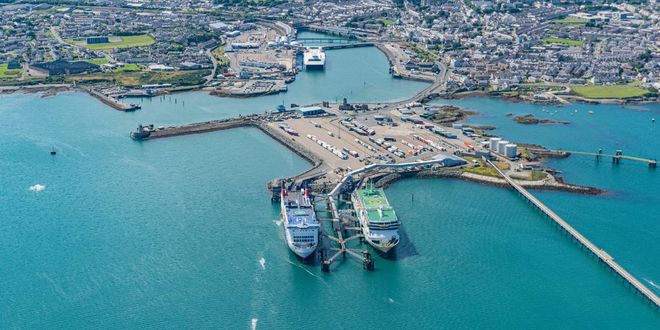
Ferries to Dublin depart from the port of Holyhead, on the island of Anglesey in North Wales. The ferry terminal is about a 5-min walk from Holyhead town centre, so it is easy to reach on foot if you’re staying nearby.
Around the port, you’ll find cafés, pubs, restaurants and shops, as well as car parks, and accommodation options.
How to get to the port in Holyhead
The port is walkable from the centre, however if you are further away or travelling with luggage, buses and taxis are readily available.
The Holyhead railway station is right next to the ferry terminal, with direct train services from major British cities such as London, Manchester, Birmingham and Cardiff, often timed to connect with ferry departures.
If you are driving, you can easily reach Holyhead via the A55 North Wales Expressway, which links to the A5. It usually takes about 1 hr 30 min to drive from Chester and around 2 hr from Liverpool, depending on traffic.
Where does the ferry arrive in Dublin?
Ferries from Holyhead in Wales usually dock at the port of Dublin, also know as Calafort Átha Cliath, the largest and most important port in the Republic of Ireland. You can easily travel from the port to the city centre by car and the public transport network (public bus, tram, and rail services).
Near the port, you can find many useful amenities and services, including restaurants, hotels, parks, and museums.
How long is the ferry ride from Holyhead to Dublin?
The ferry trip on the Holyhead - Dublin route normally ranges from 2 hr 15 min to 3 hr 30 min, depending on the vessel and company.
Related posts from our blog



FAQs
Yes, with the ferry trip from Holyhead lasting 2 hr to 3 hr and with around 8 crossings every day, it is very straightforward to plan a day trip to Dublin.
The earliest ferry to Ireland normally sets sail at about 01:30, while the last ferry to Britain returns at 22:30. This means you can have an entire day to explore and plenty of flexibility to plan your Dublin day trip.
Yes, the Holyhead - Dublin ferries typically have car decks for the transportation of vehicles. Prices usually start from about €175 for a car, €40 for a motorcycle and €200 for a caravan.
Yes, while the Holyhead - Dublin ferry route is primarily served by conventional ferries, Irish Ferries occasionally operates it with the high-speed Dublin Swift, which takes around 2 hr 15 min for the trip.
The Irish Sea can sometimes be rough, especially in windy or winter conditions. However, both Irish Ferries and Stena Line operate large, modern conventional ferries on the Holyhead - Dublin route that are well suited to these conditions and designed to provide a stable and comfortable crossing.
That said, the ride can feel more intense on the smaller, high-speed ferries that occasionally serve the route. While faster, these vessels tend to be more affected by waves and rough weather.
Tip: if you’re prone to seasickness or travelling during stormier months, opting for a conventional ferry is usually the more comfortable choice.
The distance between Holyhead and Dublin is 58 nautical miles (around 107 km).
Yes, the last ferry of the day usually sets sail for Holyhead at 22:30 and reaches the Welsh port at around 02:00. While the journey is rather short, we highly recommend that you book a cabin or a business/VIP seat, for a more comfortable journey.
With Irish Ferries and Stena Line, you can book your tickets online on Ferryhopper and pick them up in paper form from the company’s collection points at the port before the trip.
Find detailed answers to all your questions about ferry ticket changes, cancellations and refunds.
Remember that you can also use Ferryhopper's online booking modification service, available with certain ferry companies.
If your ferry trip is canceled, you usually have the following options:
- Change your ticket to another departure of equal value.
- Cancel your ticket with a request sent to the ferry operator for a full refund.
Find out more about what you can do in case of weather disruption or ferry strike.
If you’re worried about possible delays or cancellations, you can always visit our ferry travel alerts page for real-time updates on strikes, weather disruptions, and service suspensions.