 English
 Ελληνικά
 Italiano
 Español
 Deutsch
 Français
 Português
 Polski
 Nederlands
 Български
 Hrvatski
 Türkçe
 Svenska
 Dansk
Dansk
 Norsk
Norsk
 Shqip
Shqip
Ferry from France to the UK: complete guide for 2026
Plan your ferry trip to England! 🚢Ferries from France to the UK operate year-round, linking the ports of Calais, Dunkirk, Dieppe, Caen, Cherbourg, Le Havre, Saint-Malo and Roscoff with Dover, Newhaven, Portsmouth, Plymouth and Poole in southern England. Crossings take as little as 1.5 hr, making it one of the quickest and most convenient ways to travel between the two countries.
Travelling by ferry is a comfortable and flexible way to cross the English Channel, whether you're heading to England for a short break or planning a longer trip across Great Britain.
Here’s everything you need to know about planning a trip with the ferry from France to the UK in 2026.
Note: the France - UK ferry schedules for 2026 are available on our search engine as soon as ferry operators publish them.
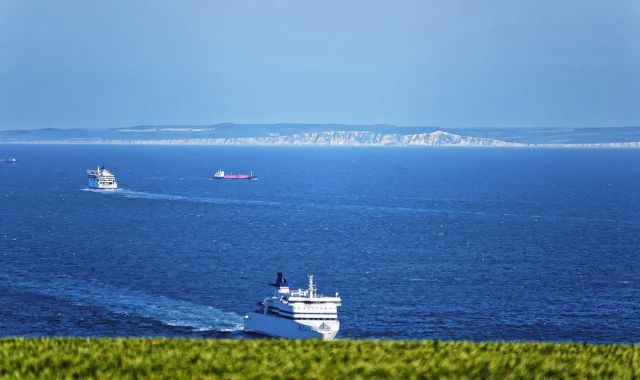
Set sail for England!
Ferry routes from France to the UK
You can travel all year round by ferry from France to the UK, with regular crossings from Calais, Dunkirk, Dieppe, Caen, Cherbourg, Le Havre, Saint-Malo and Roscoff in northern France to the ports of Dover, Newhaven, Portsmouth, Plymouth and Poole in southern England.
Note: on France - Dover crossings DFDS and Irish Ferries only allow travellers with a vehicle, while P&O Ferries accepts foot passengers and vehicles.
Ferries from Calais - Dover
There are usually around 30 daily crossings on the Dover - Calais, with ferries usually departing every hour. The ferry trip lasts around 1.5 hr and tickets are priced from about €35 per foot passenger on with P&O Ferries and around €105 per car when travelling with DFDS and Irish Ferries.
Ferries from Dunkirk to Dover
The Dunkirk - Dover route is normally operated up to 10 times a day by DFDS. The duration of the journey is about 2 hr and ticket prices start at around €100 with a car.
Ferries from Dieppe to Newhaven
You can travel by ferry on the Dieppe - Newhaven route with up to 3 daily crossings. The ferry trip typically lasts about 4-5 hr and foot passenger ticket prices start at €37.
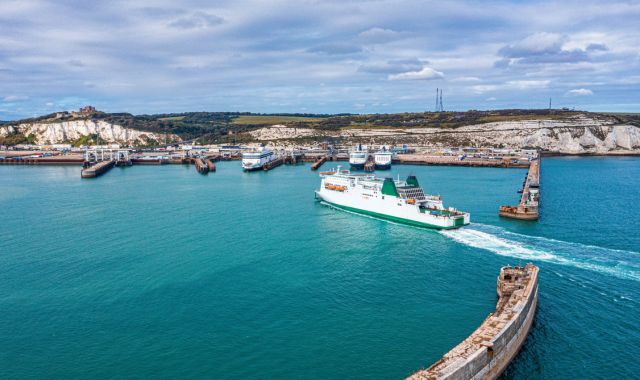
Ferry arriving in Dover
Ferries from Caen to Portsmouth
The Caen - Portsmouth ferry route operates year-round, usually with 3 daily departures by Brittany Ferries. The journey takes 6 hr to 7 hr 45 min and tickets cost from about €44.
Ferries from Cherbourg to Portsmouth
You can travel from Cherbourg to Portsmouth by ferry all year round, with 1-2 weekly crossings that take 5-6 hr. Ferry ticket prices with Brittany Ferries start from about €44.
Ferries from Le Havre to Portsmouth
Brittany Ferries serves the Le Havre - Portsmouth ferry route seasonally, from March to October, with up to 7 weekly crossings. The ferry trip lasts 8.5 to 12.5 hr and tickets cost from around €50.
Ferries from Saint-Malo to Portsmouth
You can travel on the Saint-Malo - Portsmouth all year round, with up to 7 weekly ferries. The journey with Brittany Ferries takes 7.5-12 hr and ferry tickets cost from roughly €44.
Ferries from Roscoff to Plymouth
The Roscoff - Plymouth route is operated by Brittany Ferries seasonally, between April and October. There are 1-2 daily crossings, 6 days a week, with the trip taking 5 hr 15 min to 8 hr and tickets priced from around €44.
Ferries from Cherbourg to Poole
You can sail from Cherbourg to Poole year-round, with up to 7 weekly crossings by Brittany Ferries. The ferry trip takes 4.5 hr and tickets cost from about €44.
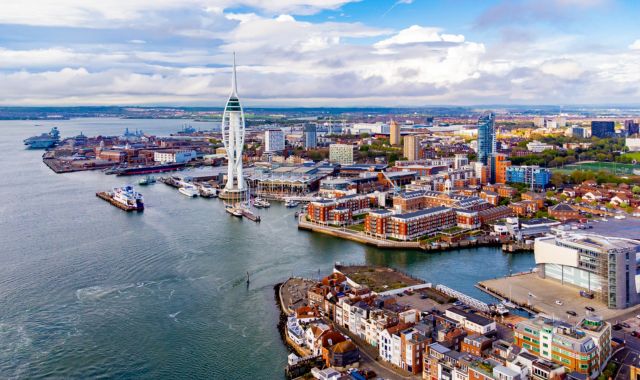
Aerial view of the city of Portsmouth in England
Tickets, offers & discounts for France - UK ferries 2026
France - UK ferry ticket prices
Ferry ticket prices from France to England in the UK usually start from €35 to €105, depending on the route and whether you’re travelling with a vehicle. Here are some indicative starting prices:
- Calais - Dover: from €35 for foot passengers and from €105 with a car
- Dunkirk - Dover: from €105, with a car
- Newhaven - Dieppe: from about €37
- Caen - Portsmouth: from around €44
- Cherbourg - Portsmouth: from about €44
- Le Havre - Portsmouth: from €50
- Saint-Malo - Portsmouth: from around €44
- Roscoff - Plymouth: from about €44
- Cherbourg to Poole: from about €44
The most budget-friendly UK - France ferry routes for foot passengers are Dieppe - Newhaven and Dunkirk - Dover with prices starting at around €35 to €40.
If you are traveling with a vehicle, then the routes from Calais or Dunkirk to Dover are particularly popular, as the starting fares include car transport.
Keep in mind that if you’re travelling as a family or group of friends and sharing a car or cabin, then the overall cost per person will be lower, as the additional cost is split between passengers.
Your final ferry ticket price will depend on the exact route, ferry company, season, accommodation type (where applicable), and whether you’re travelling as a foot passenger or with a vehicle.
Good to know: for your return trip, don’t forget to look into our blog on UK - France ferry schedules.
Offers and discounts
When travelling from France to the UK by ferry, you can take advantage of the regular discounts. While these discounts differ from one company to another, children under 16 often enjoy 50% off regular fares, while infants and toddlers up to 3 years old travel free of charge.
Additionally, the ferry companies also have special offers on UK - France ferries, such as early-bird discounts or lower prices for round-trip bookings. As such, planning and booking your ferry well in advance is the best way to secure the lowest ferry ticket prices for your trip.
These discounts and special offers are applied automatically when you book through Ferryhopper, so you’ll always get the best available price.

Dover Castle, perched atop the iconic White Cliffs
On-board services & amenities
The France - UK ferry routes are operated by conventional cruise ferries with a range of modern amenities and services for a smooth and relaxing journey.
On board, you will typically find:
- Comfortable seating in air-conditioned lounges and outer decks to enjoy the sea view
- Restaurants, cafés and bars, which serve a range of drinks, snacks and meals (including vegetarian and child-friendly options)
- Play areas with games to keep children entertained
- Duty-free shops and kiosks selling cosmetics, perfumes, sweets and alcohol
- Car decks for transporting vehicles
- Free Wi-Fi hotspot to stay connected during the trip
On the ferries operating that longer routes across the Channel, you will find a wider range of entertainment, which may include video-on-demand platforms, cinema and TV lounges, disco clubs, live music and video game areas, as well as wellness facilities, including indoor pool, spa, massage and beauty treatments.
Accessibility
The France - UK ferries are generally accessible to travellers with disabilities, featuring ramps and lifts between decks, as well as adapted amenities. The ferries operated by DFDS and Brittany Ferries on the longer France - UK routes also have wheelchair-accessible cabins.
Boarding assistance is typically available upon request and prior notification to the ferry company before your journey.
Important: accessibility features vary from vessel to vessel, so it is recommended to contact the ferry company at the time of booking for further details.
Cabins & accommodation
Are there cabins on the ferry?
Yes, on most ferries travelling from France to England you can book a cabin for 2-4 passengers. Depending on the ferry, you can choose between:
- Standard interior cabins
- Exterior cabins with a sea view
- Premium cabins and suites with extra room, additional amenities and a sea view
- Cabins for passengers with disabilities
- Pet-friendly cabins
All cabins have air conditioning, wardrobe and an en suite bathroom.
Please note that there are no cabins on ferries from Calais or Dunkirk to Dover due to the short length of the trip.
Can I book business-class seats?
Yes, on many ferries from France to England, you can book a seat in the business-class or VIP lounge for a more comfortable joureny. Specifically, Irish Ferries and Brittany, you can usually reserve a seat in their club class lounge, which is in an exclusive area on board and features comfortable seating and sea views, Wi-Fi and complimentary drinks and snacks.
Luggage
Each ferry company has its own luggage policy:
- With Brittany Ferries, you can bring as many bags as you can carry on board by yourself, regardless of size or weight, at no extra cost. You can store your luggage in the baggage room, which remains closed until 20-30 min before arrival.
- On DFDS ferries, each passenger can carry up to 50 kg of luggage. The luggage must be taken by yourself from and on board. Note that there are no luggage carts.
- When travelling with Irish Ferries, you may bring as many pieces of luggage as you can fit into your vehicle.
- With P&O Ferries, you can bring as many bags as you can carry on board by yourself, with no weight or size limits.
Pet travel
You can bring your pet with you on most France - Dover ferries, provided you include it in your booking. The ferries generally have designated pet-friendly areas, however pets are not allowed in lounges, dining areas or standard cabins.
Where do pets stay?
Depending on the route, vessel and operator, your can stay with you, in your vehicle, in the on-board kennels or in a pet-friendly cabin. If you decide to keep your pet in your car, make sure to leave a window slighly open for ventilation.
During the trip, when not staying in your vehicle or the kennels, smaller pets must be kept in their carrier, while larger pets must wear a muzzle and be kept on a lead.
What travel documents do I need for my pet?
To travel on France - UK ferries with your pet, you’ll need to bring:
- A microchip ID (the chip number must match the travel documents)
- A valid EU Pet Passport (issued in the EU or Northern Ireland) or a GB Animal Health Certificate (AHC)
- A valid rabies vaccination, administered at least 21 days before travel
- For dogs, you will also need tapeworm treatment administered by a vet 1-5 days before your arrival
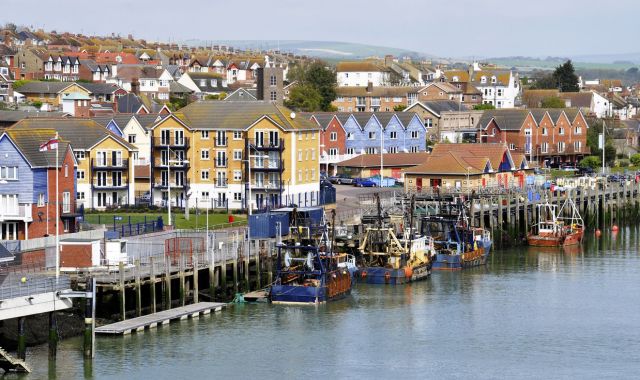
The traditional fishing port of Newhaven in England
FAQs about France - UK ferries
Which ferry companies operate from France to the UK?
There are 4 ferry companies connecting France and the UK:
- Brittany Ferries operates routes from Caen, Cherbourg, Le Havre, Saint-Malo and Roscoff to Portsmouth, Plymouth and Poole.
- DFDS operates ferries from Calais and Dunkirk to Dover, as well as from Dieppe to Newhaven.
- Irish Ferries mainly serves the Calais - Dover ferry route.
- P&O Ferries serves the Dunkirk - Dover route.
How long does the France - UK ferry trip last?
The duration of the France - UK ferry trip ranges from 1 hr 30 min to 12 hr 30 min, depending on the route and company. Here are indicative travel times for each route:
- Calais - Dover : 1 hr 30 min to 1 hr 40 min
- Dunkirk - Dover: about 2 hr
- Dieppe - Newhaven: from 4 hr to 5 hr
- Caen - Portsmouth: from 6 hr to 7 hr 45 min
- Cherbourg - Portsmouth: from 5 hr to 6 hr
- Le Havre - Portsmouth: from 8 hr 30 min to 12 hr 30 min
- Saint-Malo - Portsmouth: from 7 hr 30 min to 12 hr
- Roscoff - Plymouth: from 5 hr 15 min to 8 hr
- Cherbourg to Poole: around 4 hr 30 min
What is the fastest ferry from the UK to France?
The fastest ferry from France to the UK is the Calais - Dover route, which normally takes around 1.5 hr.
What is the cheapest ferry from France to the UK?
The cheapest France - UK ferry routes are Newhaven - Dieppe and Dunkirk - Dover, with foot passenger tickets priced from around €35 to €40, while tickets with a vehicle are usually just under €100.
However, if you are travelling with a motorbike, the tickets for the ferries from France to Dover routes start at around €60.
Is it cheaper to get the ferry or Eurotunnel?
It depends on whether you are traveling as a foot passenger or with a vehicle. As a foot passenger, the ferry routes tend to be more budget-friendly, but if you are travelling with a vehicle, the prices between France - UK ferries and the Eurotunnel are similar.
You can travel from Calais to Folkestone through the Channel Tunnel with LeShuttle in around 35 min, with up to 4 departures every hour. As with the France - Dover ferry routes, tickets on the LeShuttle service are per vehicle, for up to 9 passengers. As this is a vehicle train service, you cannot travel as a foot passenger. To decide which option best suits your trip, check out our guide to travelling between France and England by ferry or LeShuttle.
Do I need a passport on the ferry from France to the UK?
Yes, as you will be crossing the international border between France and the UK, you will need a valid passport, as national ID cards aren’t accepted for UK entry. Depending on your nationality, you may also require a visa or UK Electronic Travel Authorisation (ETA).
If you’re bringing a vehicle, make sure you carry your driving licence, vehicle registration and insurance documents.
Can I travel on France - UK ferries with a vehicle?
Yes, the ferries travelling from France to the UK have car decks for transporting vehicles, such as cars, motorcycles and caravans. DFDS and Irish Ferries only allow passengers travelling with vehicles on routes to Dover.
Make sure to bring along your driver’s licence, as well as vehicle registration and insurance documents.
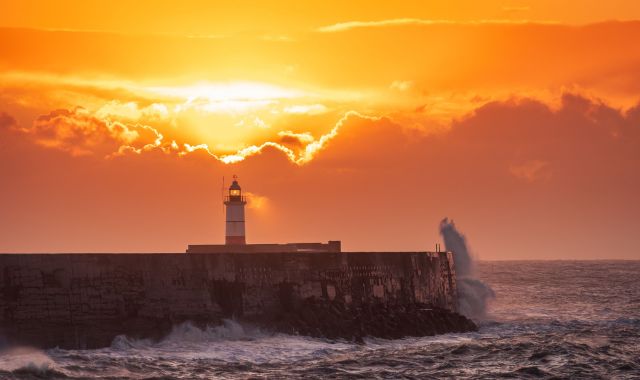
The lighthouse in Newhaven at sunset
Book France - UK ferry tickets for 2026
Planning a trip across the Channel to the UK in 2026? Take a ferry from France to England, relax on board and arrive ready to explore Dover, the famous White Cliffs and beyond! You can also use our Map of ferries to visualise routes and plan your France - UK ferry trip with no hidden fees.
Find all available routes from Hauts-de-France, Brittany and Normandy in northern France, compare ferry companies and ticket prices, and book your ferry from France to the UK on Ferryhopper in just a few clicks!