 English
 Ελληνικά
 Italiano
 Español
 Deutsch
 Français
 Português
 Polski
 Nederlands
 Български
 Hrvatski
 Türkçe
 Svenska
 Dansk
Dansk
 Norsk
Norsk
 Shqip
Shqip
The islands of the Tuscan Archipelago you need to visit
Explore 5 unspoiled gemsThe Tuscan Archipelago is one of those corners of Italy that never fails to surprise. Stretched across the Tyrrhenian Sea between the coast of Tuscany and the island of Corsica, it is made up of 7 islands—all protected within Italy's largest national park—each with its own character and pace. Some are well known, others barely visited, but all of them share the same clear water, rocky coastline, and calm atmosphere that make island-hopping in this part of the Mediterranean so compelling.
Ferries leave from several ports along the Tuscan coast, making it easy to combine more than one island in a single trip. Whether you're drawn to the beaches of Elba, the diving waters of Giannutri, or the total solitude of Pianosa, here's a guide to the islands off Tuscany's coast that you can reach by ferry.
1. Elba
Elba is the largest and most visited island in the Tuscan Archipelago, and it earns every bit of its reputation. Famous as the place of Napoleon's first exile in 1814, the island combines a rich historical legacy with some of the most diverse landscapes in the entire Italian island scene: granite peaks, chestnut forests, vineyards, and over 150 beaches ranging from sheltered sandy bays to dramatic rocky coves.
The capital, Portoferraio, is ringed by Medici-era fortifications and makes an excellent base. From here, you can easily reach Villa dei Mulini, Napoleon's island residence, and Villa San Martino in the hills just outside town. For beaches, Spiaggia di Fetovaia and Spiaggia di Cavoli on the southwestern coast are two of the most beautiful on the island, while Marina di Campo offers a long sandy stretch with all the summer amenities. Wine lovers should seek out a glass of Aleatico dell'Elba (a rich, sweet red made from a grape variety grown almost exclusively on the island) at one of the estate cantinas in the hills above Portoferraio.
Ferries from Piombino reach Elba's 3 ports all year round: Portoferraio in as little as 40 minutes, Rio Marina in 45 minutes, and Cavo in just 15 minutes. In summer, there are numerous daily departures from early in the morning to late in the evening.
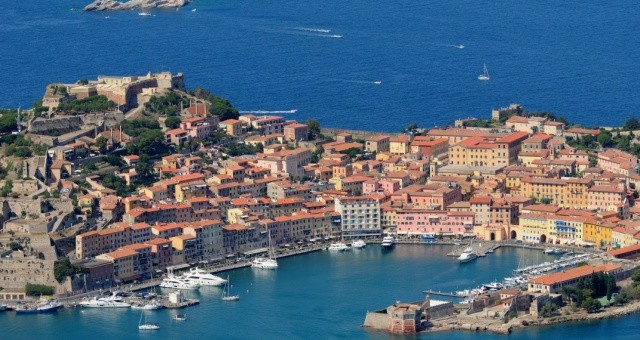
The colorful historic harbor and fortress of Portoferraio on Elba island
2. Giglio
Giglio is the second-largest island in the Tuscan Archipelago and the most popular after Elba, though it remains genuinely small-scale: there are no big hotels, no traffic lights, and the main form of transport once you arrive is a local bus connecting the 3 village centers. Its appeal is exactly that simplicity, combined with crystalline water that has made it one of the best spots for snorkeling and diving off the Tuscan coast.
Ferries arrive at Giglio Porto, the island's main harbor, a colourful cluster of pastel houses facing the sea that is pleasant in its own right. From there, a winding road climbs to Giglio Castello, a beautifully preserved medieval village enclosed within its original walls, with narrow lanes, stone archways, and sweeping views over the sea. On the other side of the island, Giglio Campese has the longest sandy beach and a watchtower that catches the evening light beautifully. The island produces its own Ansonica wine, a dry white made from a grape variety that thrives in the island's volcanic soil and salty sea air.
Ferries from Porto Santo Stefano reach Giglio Porto in around 1 hour, with up to 9 daily crossings all year round.
Porto Santo Stefano - Giglio from €16
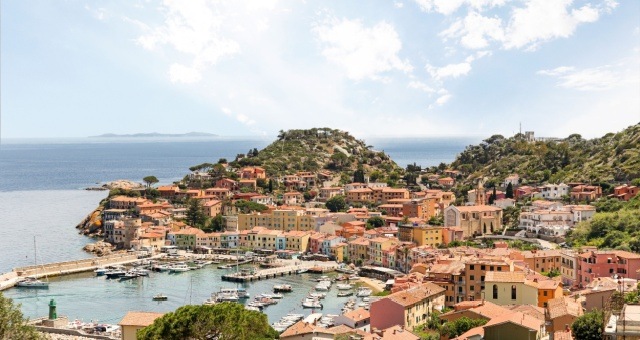
The vibrant harbor and pastel-colored houses of Giglio Porto on Giglio island
3. Capraia
Capraia is the wildest and most volcanic of the islands in the Tuscan Archipelago, closer geographically to Corsica than to the Tuscan mainland. It has no sandy beaches to speak of, but what it offers instead is something rarer: an almost entirely unspoilt coastline of dark lava cliffs, sea caves, and coves of clear deep water.
The island's single village, also called Capraia, sits above the port on a hillside of terraced gardens and old stone houses, with a Genoese fortress crowning the ridge above. The best way to experience the island is on foot or by sea: the hiking trail that circles the island passes through Mediterranean scrub known as macchia mediterranea (dense coastal scrubland of rosemary, myrtle, and rock rose), and the sea caves accessible only by kayak or small boat are among the most impressive natural features in the entire archipelago. Capraia is also an important stopover for migratory birds, making it a draw for birdwatchers in spring and autumn.
Ferries from Livorno run to Capraia year-round in around 2 hours 45 minutes, with up to 2 daily crossings depending on the season.
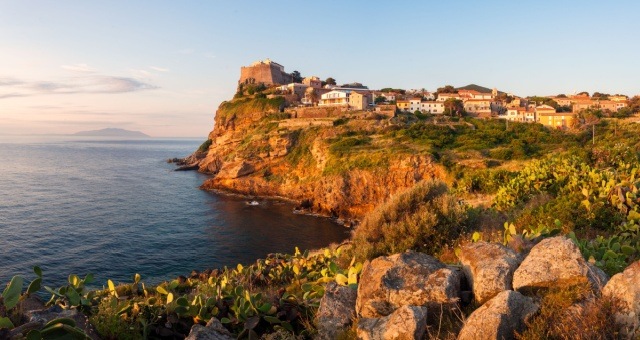
The dramatic clifftop fortress and village of Capraia Isola
4. Pianosa
Pianosa is unlike any other island in the Tuscan Archipelago. Flat as its name suggests (from the Latin plana, meaning level), it served as a maximum-security prison for most of the 20th century and was only partially opened to visitors in 1997. The result is an island that time has barely touched: no cars, no permanent tourism infrastructure, and an interior of ancient olive groves and abandoned farmsteads that feels genuinely remote.
Access to Pianosa is strictly regulated as part of the Tuscan Archipelago National Park, with visitor numbers capped each day, which means you will need to book your ferry and any guided excursion well in advance, especially in summer. The payoff is some of the clearest water in the Mediterranean: the seas around Pianosa are a marine protected area, and the snorkeling along the Cala di San Giovanni and Cala della Rossa coastline is exceptional. There are no overnight stays allowed for most visitors, making it a genuine day-trip destination.
Ferries from Piombino serve Pianosa with 1-2 crossings per week all year round, with the journey taking around 2 hours 55 minutes.
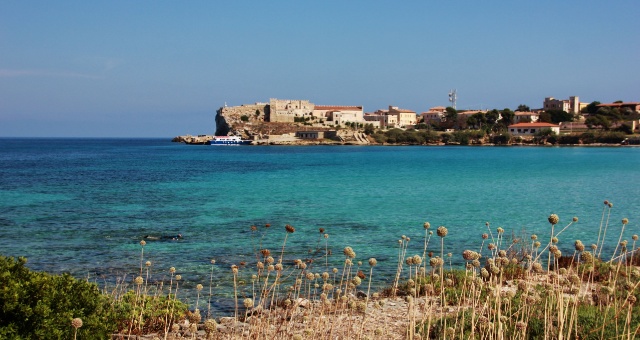
Crystal-clear turquoise waters along the coast of Pianosa island
5. Giannutri
Giannutri is the southernmost island of the Tuscan Archipelago and one of its best-kept secrets. Shaped like a crescent moon and almost entirely covered in leccio (holm oak) and Mediterranean scrub, it has fewer than 100 permanent residents and no roads open to public vehicles. It is, in the best possible sense, an island you visit to do very little beyond swim, snorkel, and walk.
The ruins of a Roman villa dating to the 1st century AD are the island's main historical attraction, still partially visible near Cala Maestra on the northern coast. The water around Giannutri is part of the national park's marine protected zone, and the seabed here hosts gorgonian fans, posidonia meadows, and the kind of clarity that makes even shallow snorkeling feel like proper diving. The two main coves, Cala Spalmatoio and Cala Maestra, are easily walkable from one another and both have lovely swimming.
Seasonal ferries from Porto Santo Stefano run to Giannutri between April and December, with the crossing taking around 1 hour and up to 4 weekly departures.
Porto Santo Stefano - Giannutri from €17
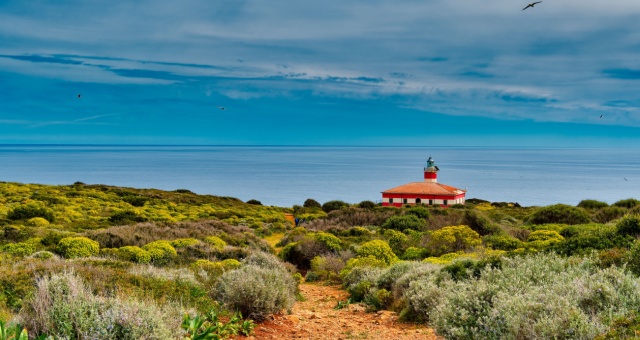
The iconic red and white lighthouse on the rugged Giannutri island
Island-hopping in the Tuscan Archipelago: book your ferry tickets
Ready to explore the islands off Tuscany's coast? On Ferryhopper you can compare schedules and prices for all ferry routes across the Tuscan Archipelago in one place. Whether you're planning a day trip to Giglio or a longer multi-island adventure through Elba, Capraia, and beyond, check our Map of ferries to build your itinerary and book your ferry tickets hassle-free!