English
 Ελληνικά
 Italiano
 Español
 Deutsch
 Français
 Português
 Polski
 Nederlands
 Български
 Hrvatski
 Türkçe
 Svenska
 Dansk
Dansk
 Norsk
Norsk
 Shqip
Shqip
Ferry to Tenerife from Spain
Tickets, prices & schedulesThere are regular ferry crossings to Tenerife (port of Santa Cruz) from the mainland ports of Huelva and Cádiz throughout the year.
The ferry route from Huelva to Tenerife is served up to 3 times a week by Fred. Olsen Express. There is a direct route and a crossing with a stop in Las Palmas, with the journey taking 32 hr or 42.5 hr respectively, and ticket prices starting at around € 116.89.
The ferry route from Cádiz to Tenerife is usually direct and operated with 1 weekly crossing by Baleària. Ferry time is around 33 hr, and ferry tickets start at around € 125.
Find updated info, compare ferry timetables, companies and prices for 2026, and book your ferry tickets on Ferryhopper without any hidden fees.
Spain - Tenerife ferry schedules



How much is the ferry from Spain to Tenerife?
Take a look at indicative ferry ticket prices for the Spain - Tenerife route; check the cost for standard tickets, family bookings, and vehicle transportation.
| Huelva – S. C. de Tenerife | S. C. de Tenerife – Huelva | Cádiz – S. C. de Tenerife | |
|---|---|---|---|
| 1 Adult | € 116.89 | € 116.89 | € 125 |
| 2 Adults | € 267.7 | € 275.53 | € 240 |
| 2 Adults, 1 Car | € 441.62 | € 467.06 | € 437 |
| 2 Adults, 2 Children, 1 Car | € 746.81 | Price not available | Price not available |
Discounts
On Ferryhopper you can take advantage of fixed discounts for your trip to Tenerife. While these discounts differ from one company to another, you can typically expect lower ferry ticket prices for the following passenger categories:
- Children 4-11 years old
- Young travelers (up to 25-30 years old)
- Passengers over 60 years old
- Large families (Spanish citizens)
Additionally, there are discounts for Canary Island residents on trips within the archipelago and between the Spanish mainland and the Canaries.
Note: infants and toddlers up to 3 years old normally travel free of charge.
On-board services and amenities
Baleària and Fred. Olsen operate the Spain - Tenerife ferry routes with conventional cruise ferries, such as the Marie Curie and Volcan de Tinamar, which are designed for long-distance travel and feature modern amenities and services for a comfortable and relaxed journey. Onboard, you will usually find such as:
- Comfortable air-conditioned lounges and spacious seating on outer decks
- Bars and restaurants serving hot and cold drinks snacks and meals
- Shops and kiosks with snacks, gifts, essentials and last-minute purchases for the trip
- Onboard entertainment, including children’s play areas with interactive games and movies, arcade games, TV lounges, digital platform with movies, series and games, and seasonal activities
- Saltwater swiming pool with sun loungers and outdoor bar
- High-speed Wi-Fi access with a range of data bundles to suit your needs
For more details, check out our guide on on-board ferry services in Spain.
Cabins and accommodation
Can I sleep on the Spain - Tenerife ferry?
Yes, all ferries from mainland Spain to Tenerife involve overnight travel, so booking accommodation where you can sleep comfortably is worth considering.
On Fred. Olsen Express ferries from Huelva, you can choose between a private cabin and a bed in the shared Sleep Lounge. If you book a seat instead, passengers without cabins can still use dedicated onboard showers.
On Baleària ferries, you can book a cabin or choose seating, including reclining seats in the VIP lounge. Cabins are recommended for extra privacy and rest on the long Cádiz-Tenerife crossing, particularly when traveling with children or pets.
What cabins can I book?
On the ferries from Tenerife to Huelva, you can book a cabin that can accommodate up to 4 passengers. Typically, you have a choice between:
- Standard inside cabins
- Outside cabins with a sea view
- Deluxe cabins and suites with a double bed, meal and sea view
- Accessible cabins with adapted amenities for passengers with disabilities
- Pet-friendly cabins with direct access to outside deck
On Fred. Olsen ferries from Huelva, you also have the option of booking a bed in the Sleep Lounge, with private locker and access to VIP bathroom and showers.
Cabin prices normally start from about €460 to €500, depending on the route, while beds in the shared lounge cost from around €160.
Can I travel with business-class seats?
Yes, both operators serving the mainland Spain - Tenerife ferry routes offer premium seating options.
- On Baleària ferries from Cádiz, you can book a standard numbered seat in the Sirena lounge or an upgraded Neptuno seat in the VIP lounge.
- When traveling with Fred. Olsen from Huelva, you can book standard seats, as well as Comfort seats in its business-class lounge.
These upgraded seats have extra legroom and are larger than the standard seats, so you can stretch out, and include power and USB sockets to keep your devices charged.
Prices for business-classs seats usually start at around €135.
Accessibility
The ferries from Spain to Tenerife are generally accessible to passengers with disabilities, featuring a range of adapted amenities onboard. These include adapted seating and toilets, wheelchair anchor points, barrier-free routes and lifts connecting the vehicle and passenger decks, as well as accessible cabins with adapted amenities.
Both Baleària and Fred. Olsen offer free assistance during boarding, the crossing and disembarkation, provided you get in touch with the company at least 48 hr ahead of your departure.
Note: accessibility features vary from vessel to vessel, so it is recommended to contact the ferry company at the time of booking for further details.
Restaurants and meals
As for meal options, you can dine at one of the restaurants, bring your own meals or grab a quick snack from one of the bars, cafes and small shops. Some ferry companies, such as Fred. Olsen Express, also provide gluten-free, vegan, low-sodium, and vegetarian meals.
Vehicle transportation
Bringing your own vehicle on board is one of the greatest advantages of traveling there by ferry. Tenerife is the largest of the Canaries and having your vehicle (car, van, motorhome, etc.) with you means you can easily explore the whole island. Prices for vehicle transportation start at around €180, depending on the vehicle type, travel dates and operator.
For maximum flexibility, you can also bring a caravan. Caravans are a great option to explore the island. You can drive around all day and comfortably camp under the stars at night!
Wi-Fi access
Both operators serving the Spain - Tenerife routes offer a free basic Wi-Fi for messages and emails, as well as data bundles for high-speed internet access for streaming.
Luggage
When traveling with Baleària and Fred. Olsen Express between mainland Spain and the Canary Islands, you can bring as much luggage as you can carry on board yourself, free of charge. The ferries have a dedicated luggage storage area, however it may not be accessible during the trip, so keep a bag with personal items with you. If you are traveling with a car or camper van, you can store your items in your vehicle.
Tip: if you're catching the ferry from Spain to the Canary Islands without a vehicle and you wish to carry large items, such as surfboards or diving gear, contact the ferry company to inquire about size and weight restrictions.
Pet travel
You can bring your pets on Spain - Tenerife ferries, provided you include them in your reservation when booking your tickets.
Generally, pets are allowed in seating lounges and on passenger decks, but they are not allowed in dining areas. Smaller pets must be kept in a carrier, while larger pets must wear a muzzle and be kept on a leash.
Don’t forget to bring along the necessary travel and health documents, tickets and any pet supplies you may need for the journey.
Good to know: for more information, you can check out our guide on traveling with pets on ferries in Spain.
Where do pets travel during the crossing?
The pet accommodation options on the Spain - Tenerife ferries are as follows:
With Baleària ferries from Cádiz, your pet can travel in a:
- Pet-friendly seat with you throughout the crossing, inside its own carrier.
- Pet kennel on the ferry.
- Pet-friendly cabin with access to designated pet areas.
With Fred Olsen on the ferry from Huelva, you can keep your pet in a:
- Pet-friendly cabin with access to pet-friendly terraces, where you can walk your pet during the trip.
- Ventilated kennel, which is accessible throughout the journey and have a video system, so you can check up on your pet via your mobile device.
Useful tips for your ferry trip to Tenerife from mainland Spain
Here are some travel tips for your trip from mainland Spain to Tenerife:
- The ports of Cádiz and Huelva can get very busy, especially in the summer, so make sure you arrive there at least 1.5 hr ahead of departure. Ιf you are traveling with a vehicle, it's recommend to arrive at least 2-3 hr in advance to ensure a smooth boarding process.
- The sea can get a bit choppy, so if you are sensitive to the waves, consider taking seasickness medication before the trip. As always, you can discuss your options with your pharmacist or doctor.
- As the ferry trip from mainland Spain to Tenerife is overnight, so we recommend booking a cabin for more privacy and comfort. Alternatively, you can book a reclining seat in the business lounge.
- Treat your four-legged companion to the ultimate pet vacation by trying out some of the best dog-friendly activities in Tenerife.
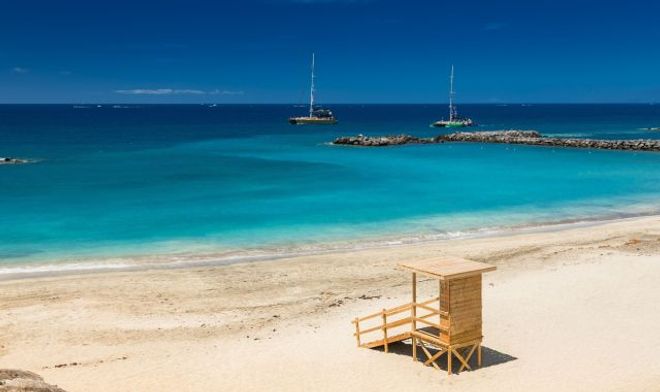
- Don’t forget to pack your swimwear, towel and sunscreen and plan a visit to Castro Beach, one of the real hidden gems in the Canary Islands.
- As cabins and spaces in the vehicles decks are limited, it's best to book your return tickets on the Tenerife - Huelva or Tenerife - Cádiz ferries in advance.
- From Tenerife, you can easily reach other neighboring islands in the Canaries, such as La Palma, Gran Canaria, and La Gomera. On Ferryhopper, you can find all available island-hopping routes in the Canary Islands and plan your trip on our Map of ferries in just a few steps.
Where to take the ferry from mainland Spain to Tenerife
Ferries to Tenerife depart from 2 ports in Andalusia (southwestern Spain): Huelva and Cádiz.
In Huelva, ferries leave from the South Pier (Muelle Sur) at the Puerto Exterior, the city's outer port. The ferry terminal is around 17 km from central Huelva, so it is not within walking distance of the city center. The terminal has basic traveler amenities, such as a pre-boarding area, parking, restrooms, air conditioning, vending machines, luggage racks, and a ticket office that opens before departures.
In Cádiz, ferries to Tenerife use the Port of the Bay of Cádiz, with Canary Islands services operating around Muelle Marqués de Comillas. The port is within walking distance of Cádiz railway station, Plaza de Sevilla and the Old Town. Around the port and Plaza de Sevilla you can find cafés, restaurants, hotels, shops, parking facilities, and the ferry operator's passenger facilities.
Important: the exact berth can vary according to port operations, so make sure to check your ticket and follow the ferry company's signs when you arrive.
How to get to Cádiz and Huelva ports?
Getting to the port of Huelva
- By car: from Huelva, take the H-30 toward La Rábida/Puerto and continue along the N-442. Follow signs for Puerto Exterior and Terminal de contenedores - Ferry to reach Muelle Sur. There is parking and a vehicle pre-boarding area at the terminal.
- By taxi: a taxi ride from central Huelva usually takes 20-25 min, depending on traffic.
- By train or bus: long-distance trains and buses take you to central Huelva rather than directly to Muelle Sur, so from there you will need to continue to the ferry terminal by taxi or other local transport.
- From Seville Airport: the airport is roughly 105 km from Huelva, with the taxi or car ride to the port taking around 1.5 hr.
Getting to the port of Cádiz
- On foot: the ferry area is only a short walk from the railway station, the bus station at Plaza de Sevilla and historic center.
- By train from Jerez Airport: Renfe's C-1 Cercanías service connects Jerez Airport with Cádiz in around 1 hr, while selected Media Distancia trains take around 45 min. From Cádiz station, continue to the port on foot.
- By bus from Jerez Airport: intercity services M-050, M-052 and M-053 connect the airport with Cádiz.
- By local bus: urban bus lines 1, 3 and 5 stop on or near Avenida del Puerto and Plaza de Sevilla, near the port entrances.
- By car: you can reach Cádiz via the A-4 and follow the CA-35 and signs for the port. Jerez Airport is around 45 km away, with the drive taking 30-40 min.
Where does the ferry arrive in Tenerife?
Ferries from mainland Spain typically dock arrive at the port of Santa Cruz de Tenerife. The seaside town, which is also the island's capital, is located in the northeastern part of Tenerife. The port is near central Santa Cruz and about 15 km from the Tenerife North Airport and approximately 60 km from the Tenerife South Airport.
Around the port, you will find plenty of traveler amenities, including cafés, bars, restaurants, and shops, as well as hotels, ATMs, tour operators, car rental agencies, and other useful services.
How long is the ferry ride from Spain to Tenerife?
The duration of the ferry trip to Tenerife from mainland Spain ranges from 32 to 42 hr 30 min, depending on the route:
- Huelva - Tenerife: from 32 hr with the direct ferry to 42 hr 30 min with and intermediate stop in Las Palmas de Gran Canaria.
- Cádiz - Tenerife: around 33 hr, as this is usually a direct crossing.
When does the first ferry from mainland Spain leave?
The earliest ferry to Tenerife leaves at 09:00 from Huelva and and at 12:00 from Cádiz.
When does the last ferry to Tenerife leave?
The last ferry of the day for Tenerife departs at 23:59 from Huelva and at 14:00 from Cádiz.
Related posts from our blog



FAQs
The shortest ferry route to Tenerife is from Huelva port. The shortest crossing takes around 32 hr.
Ιt may seem like a challenging task, but taking the ferry from Andalusia to the island of Tenerife is an adventure worth experiencing!
Sailing across the Atlantic Ocean is a dream come true for many travelers, due to the awe-inspiring landscape, the majestic vastness of the sea and the excellent onboard ferry services.
Taking the ferry is like a mini vacation on board! You can book your own cabin, transfer your car or caravan, enjoy several entertainment amenities, such as outdoor bars and free Wi-Fi, or even bring your furry friends with you. It is a perfectly safe transport option and you get to relax, enjoy the ocean views and have fun all at the same time.
Tip: a ferry can be the best option if you’re traveling with kids. Most ferry companies make special arrangements for families traveling to Tenerife, providing highchairs, baby cots, changing facilities, and kids’ menus.
- The distance between Huelva and the port of Santa Cruz de Tenerife is approximately 690 nautical miles (about 1,280 km).
- The distance between Cádiz and the port of Santa Cruz de Tenerife is 750 nautical miles (1,390 km).
No, the ferry routes from mainland Spain to Tenerife are operated by conventional cruise ferries, whick take 32-42.5 hr to reach the Canary Islands.
Yes, all ferries from mainland Spain to Tenerife travel at night, with the duration ranging from 32 to 42.5 hr, depending on your port of departure and crossing.
The conventional ferries traveling from Cádiz and Huelva to the Canaries are designed for long-haul journeys, so they typically have cabins and reclining seats available for a more comfortable and enjoyable trip.
When booking your Spain - Tenerife trip on Ferryhopper, you can easily check in online, get your tickets on your phone, and board the ferry directly with your e-ticket without collecting any paper tickets at the port.
Find detailed answers to all your questions about ferry ticket changes, cancellations and refunds.
Remember that you can also use Ferryhopper's online booking modification service, available with certain ferry companies.
If your ferry trip is canceled, you usually have the following options:
- Change your ticket to another departure of equal value.
- Cancel your ticket with a request sent to the ferry operator for a full refund.
Find out more about what you can do in case of weather disruption or ferry strike.
If you’re worried about possible delays or cancellations, you can always visit our ferry travel alerts page for real-time updates on strikes, weather disruptions, and service suspensions.